Alright, fellow wanderlusters, gather ‘round! Today, March 31, 2026, marks another scorching (but glorious!) day here in Vietnam, and my brain is overflowing with thoughts about a place that often gets shortchanged by travelers: Can Tho. Seriously, it’s like everyone zips in, does the Cai Rang Floating Market tour, and then zips out. And while Cai Rang is cool (we’ll get to it), Can Tho is SO much more than just a quick boat ride. It’s the vibrant, beating heart of the Mekong Delta, and frankly, it deserves your love and more than a mere half-day.
I’ve lived in Vietnam for years now, and I’ve seen countless itineraries where Can Tho is just a footnote. But I’m here to tell you, as someone who’s been back countless times, eaten my weight in Bánh Xèo, and navigated more canals than I can count, that you’re missing out if you don’t dig a little deeper. Let me be your slightly sarcastic, overly enthusiastic guide to truly experiencing Can Tho, the Mekong Delta’s unsung hero.
🛵 Getting There & Getting Around: The Delta Shuffle
First things first: getting to Can Tho is a breeze. From Ho Chi Minh City, grab a bus! FUTA Bus Lines (Phương Trang) or Thanh Buoi are your best bets. They’re comfortable, efficient, and usually include a shuttle to your accommodation once you arrive in Can Tho. Expect to pay around 150,000 – 200,000 VND (about $6-8 USD) for the 3.5-4 hour journey. Book your ticket a day in advance, especially if you’re traveling on a weekend.
Once you’re in Can Tho, the city itself is quite walkable, especially the riverside area. For longer distances, Grab (bike or car) is readily available and cheap. If you’re feeling adventurous, rent a motorbike for around 120,000-150,000 VND ($5-6 USD) per day. Just remember, traffic in the city can be… an experience. Always wear a helmet!
🛶 Cai Rang & Beyond: Floating Markets & Local Life
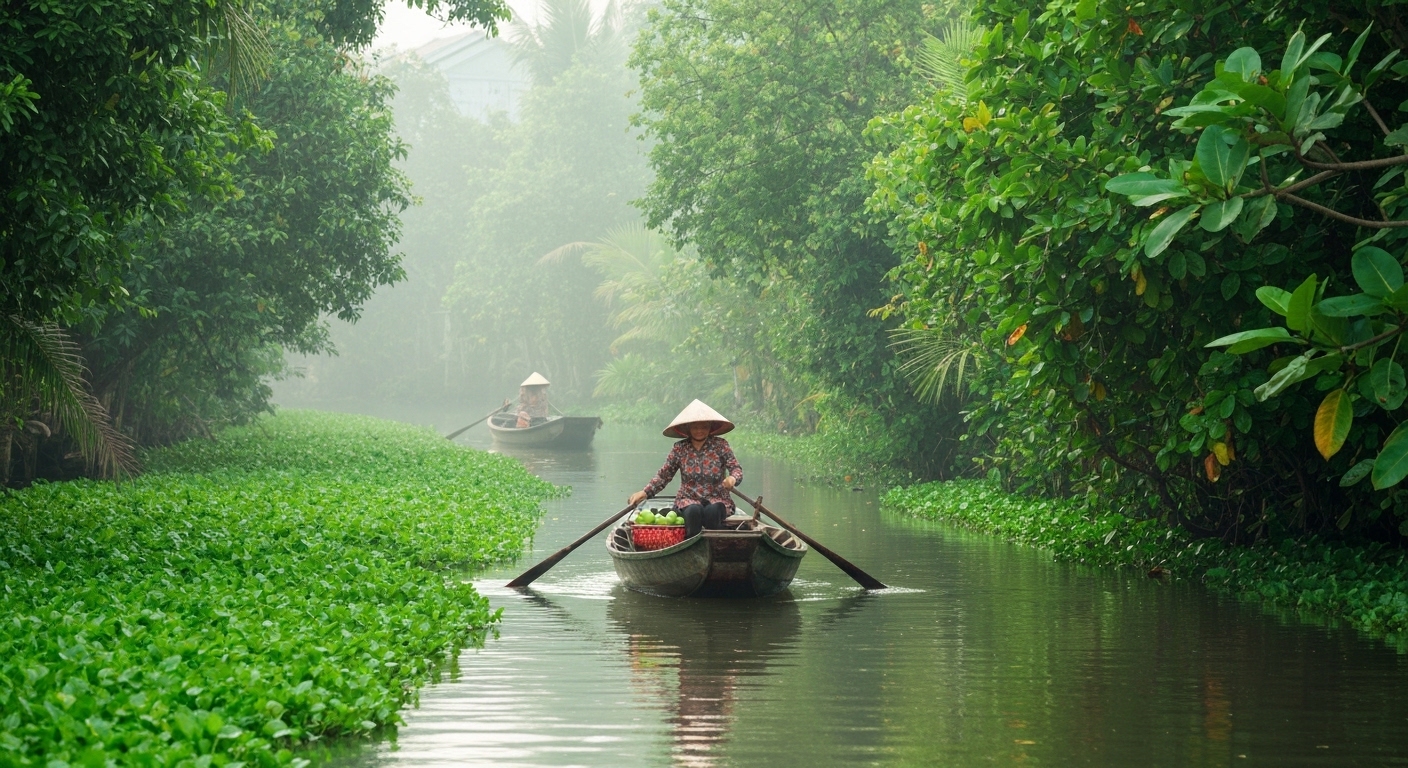
Okay, let’s address the elephant in the canal: Cai Rang Floating Market. Yes, it’s iconic. Yes, you should go. But here’s the kicker: you HAVE to go early. Like, 5:00 AM – 7:00 AM early. Any later and you’ll mostly see tourist boats circling a handful of remaining vendor boats. The market isn’t what it used to be – land-based markets are easier for many – but it’s still a fantastic snapshot of river life. Hire a small local boat for about 200,000-300,000 VND ($8-12 USD) per person for a 2-3 hour tour, often including a stop at a noodle factory or fruit orchard.
“I remember one time, trying to be ‘efficient,’ I convinced my travel buddy we could skip the 5 AM start. We rolled up at 8 AM, and the market was practically a ghost town. My friend’s face was a mixture of ‘I told you so’ and ‘why did I trust you?’ Lesson learned: the Mekong Delta doesn’t wait for late sleepers.”
But here’s the “beyond” part:
- Phong Dien Floating Market: If you want a truly local, less touristy floating market, consider Phong Dien. It’s a bit further out (about 1.5 hours by boat from Can Tho center), so combine it with Cai Rang. It’s smaller, with more traditional sampan boats and a real community vibe.
- Ong Temple (Chùa Ông): Nestled by the river, this vibrant Chinese temple is a burst of color and incense. It’s a peaceful escape from the bustling city streets and a great spot for some reflective moments (and killer photos!).
- Can Tho Museum: Need a dose of history and culture? This museum offers insights into the region’s past, from ancient times to modern developments. It’s well-maintained and provides context to everything you’re seeing.
- Con Son Islet (Cồn Sơn): This eco-tourism gem is fantastic! Take a local ferry (super cheap, like 5,000 VND / $0.20 USD) across the river, then wander through fruit orchards, visit local workshops (think traditional cake making, fish farming), and enjoy a truly tranquil rural experience. My favorite is the “flying snakehead fish” performance! It’s goofy but genuinely impressive.
- Just Wander! Honestly, my best Can Tho memories are from just renting a bicycle and getting lost on the small concrete paths threading through the labyrinthine canals. You’ll see local kids playing, women doing laundry, men fishing – real, everyday life unfolding.
🍲 Eat Your Heart Out: A Culinary Adventure
Oh, the food! Can Tho’s culinary scene is a revelation. Forget your generic Vietnamese restaurant back home; this is where regional specialties shine.
- Bánh Xèo: The crispy, savory pancake is king here. Filled with shrimp, pork, bean sprouts, and usually served with a huge plate of fresh herbs and a dipping sauce. My favorite spot is Bánh Xèo 7 Tới (7 Toi), near Ninh Kieu Wharf. Expect to pay around 35,000-50,000 VND ($1.50-2 USD) for a massive one.
- Bún Riêu Cua: Crab noodle soup. Rich, tangy, slightly sweet, and utterly addictive. Often topped with pork, blood sausage, and tofu. Look for street stalls; they’re often the best.
- Lẩu Mắm: This is for the adventurous eaters! A fermented fish hotpot. It sounds intimidating, and the smell is… distinct, but the flavor is deep, savory, and incredibly satisfying. It’s typically loaded with various meats, seafood, and a mountain of fresh vegetables. A shared pot for 2-3 people will cost around 150,000-250,000 VND ($6-10 USD).
- Nem Nướng Cái Răng: Grilled pork skewers, often served with rice paper, fresh herbs, and a special peanut dipping sauce. It’s a delightful DIY wrap-and-roll experience. Try it at Quán Nem Nướng Út Hạnh.
- Fresh Fruit: You’re in the fruit basket of Vietnam! Durian, rambutan, mangosteen, jackfruit – everything is incredibly fresh and cheap.
The Can Tho Night Market along Hai Ba Trung street is a fantastic place to graze. You’ll find everything from fresh seafood BBQ to sweet desserts. Just follow your nose!
🏨 Where to Rest Your Head: From Homestays to Hotels
Can Tho has a good range of accommodation options. If you’re on a budget, hostels like Hometravel Mekong Hostel offer clean dorms and private rooms, often with great communal vibes for meeting other travelers. For something mid-range, there are plenty of hotels around Ninh Kieu Wharf. My personal recommendation, however, is to consider a homestay outside the city center, perhaps on one of the smaller islets or along a canal. It’s a fantastic way to experience local life, enjoy home-cooked meals, and wake up to the sounds of the Delta, not traffic. Many also offer cooking classes or bike rentals.
🎒 Final Thoughts
Can Tho isn’t about ticking off famous landmarks; it’s about slowing down, breathing in the humid, tropical air, and immersing yourself in the rhythm of the Mekong Delta. It’s about the smiles of the locals, the chaotic beauty of the markets, the surprisingly delicious fermented fish hotpot, and the sheer tranquility of a boat ride through a quiet canal. So next time you’re planning your Vietnam adventure, give Can Tho the time it truly deserves. Go beyond the floating market, and I promise, you’ll find a piece of Vietnam that will stay with you long after you’ve left its muddy, beautiful waters. Happy travels, friends!